DEAD
HARBOR
The premise
A modern day outbreak hit an island city and nobody made it. The panic is long over. The power still runs, the cars are still parked, the phones still ring until voicemail picks up. You arrive after the noise has ended, and the quiet is the frightening part.
DEAD HARBOR is classic survival horror. Scarce ammunition, safe rooms, locked doors that remember their keys, and an island that rearranges what you thought you knew about it every time you learn a new route.
Screenshots
Devlog
The island is now the size of Skyrim
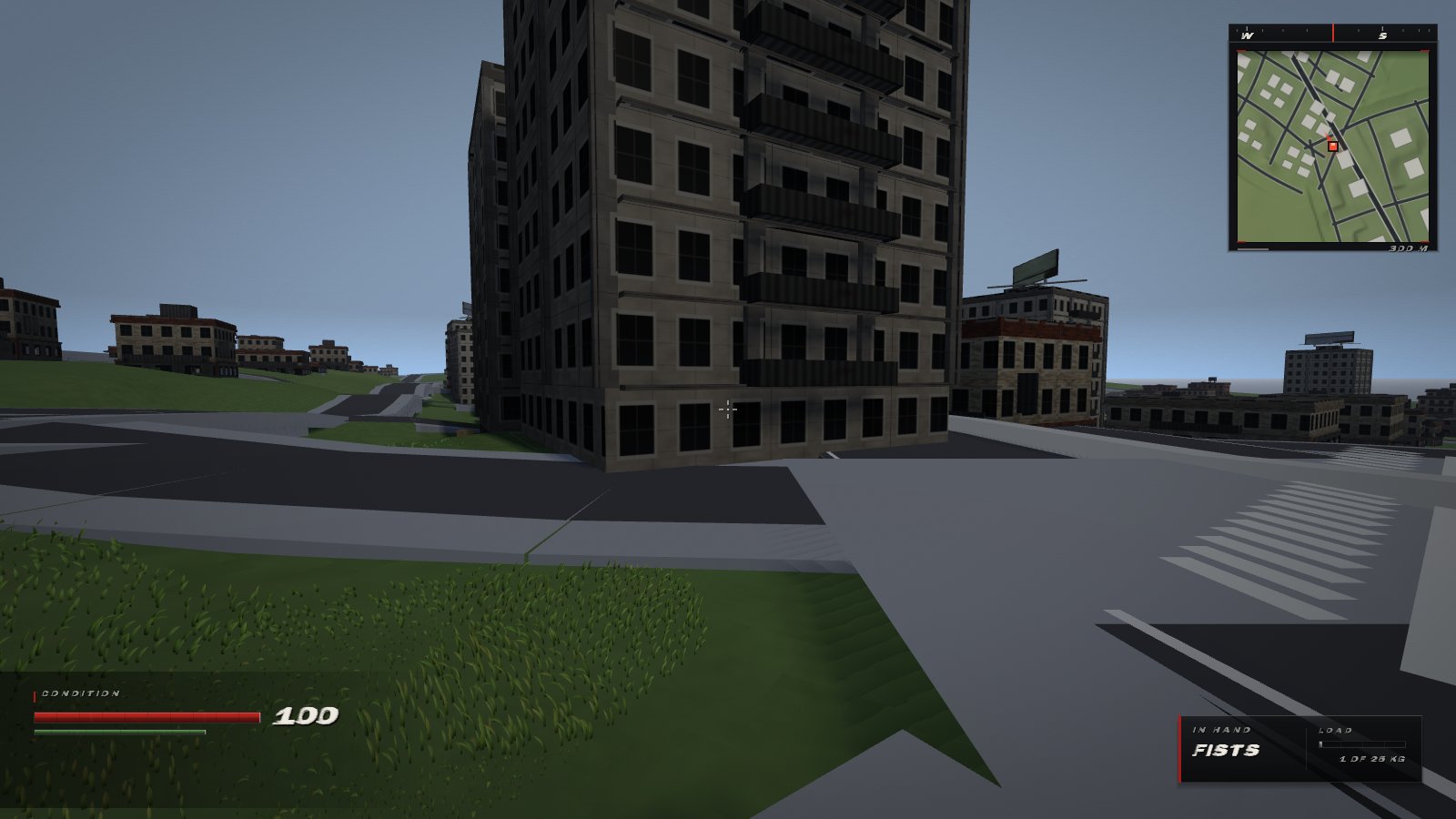
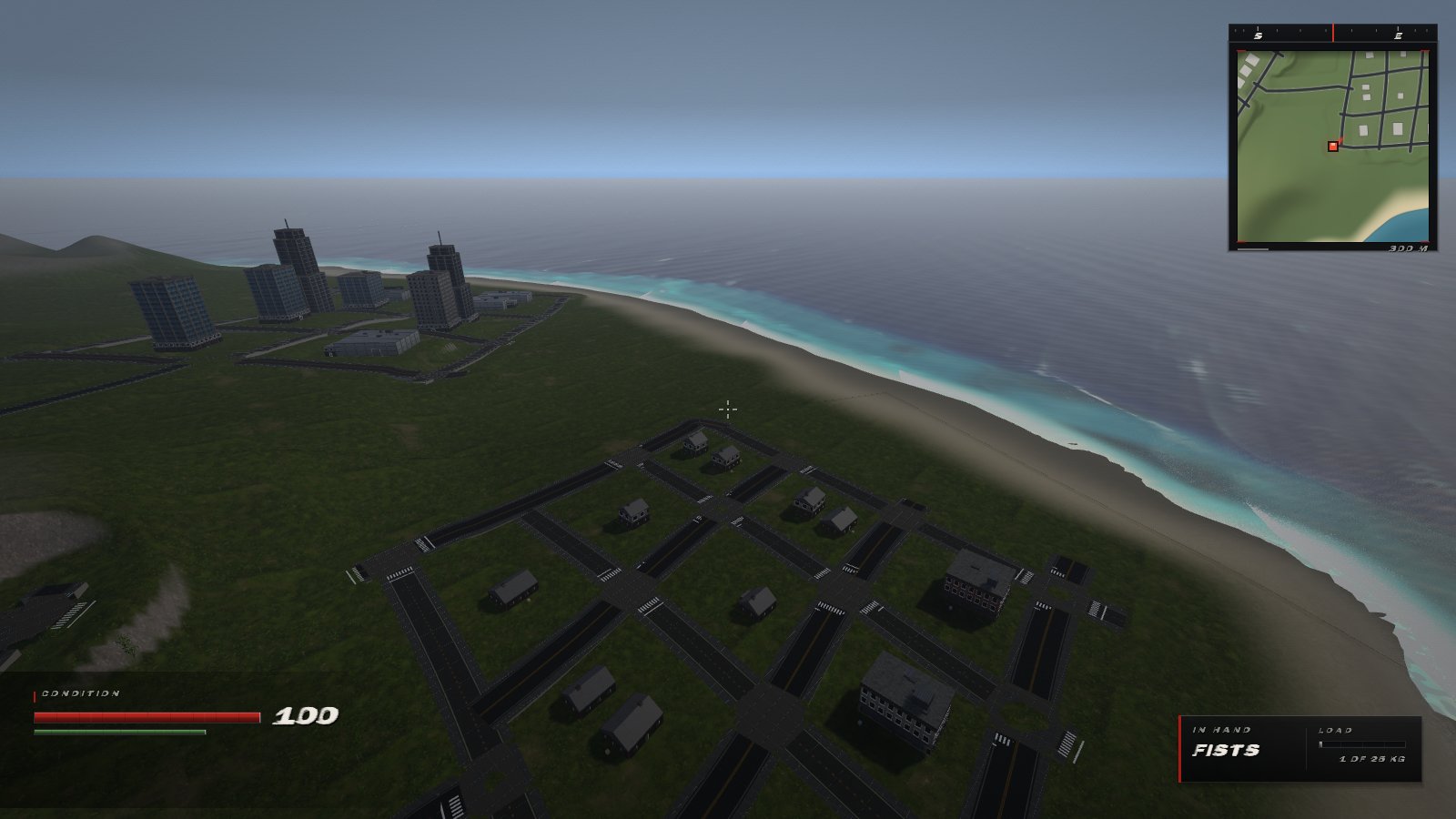
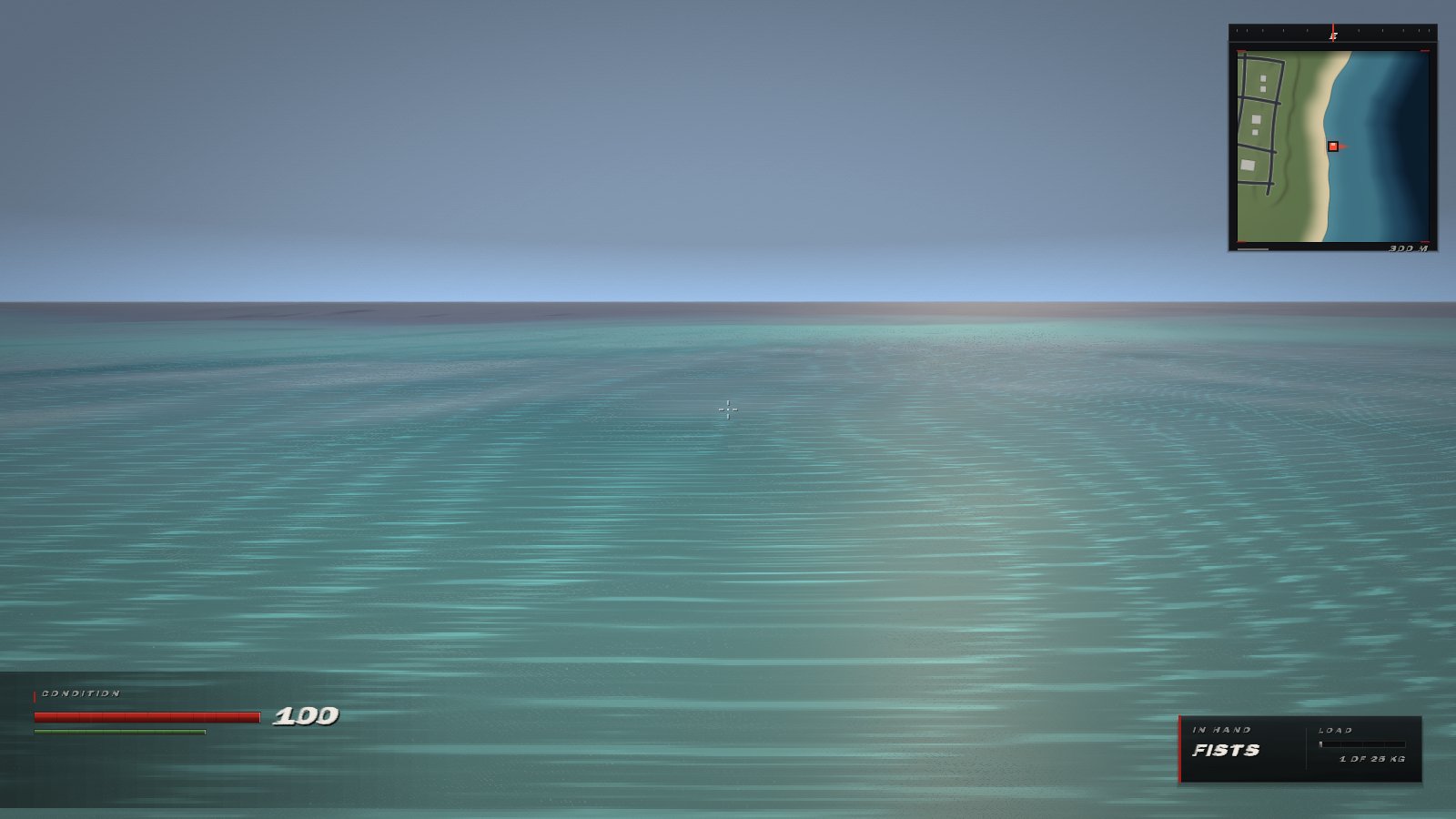
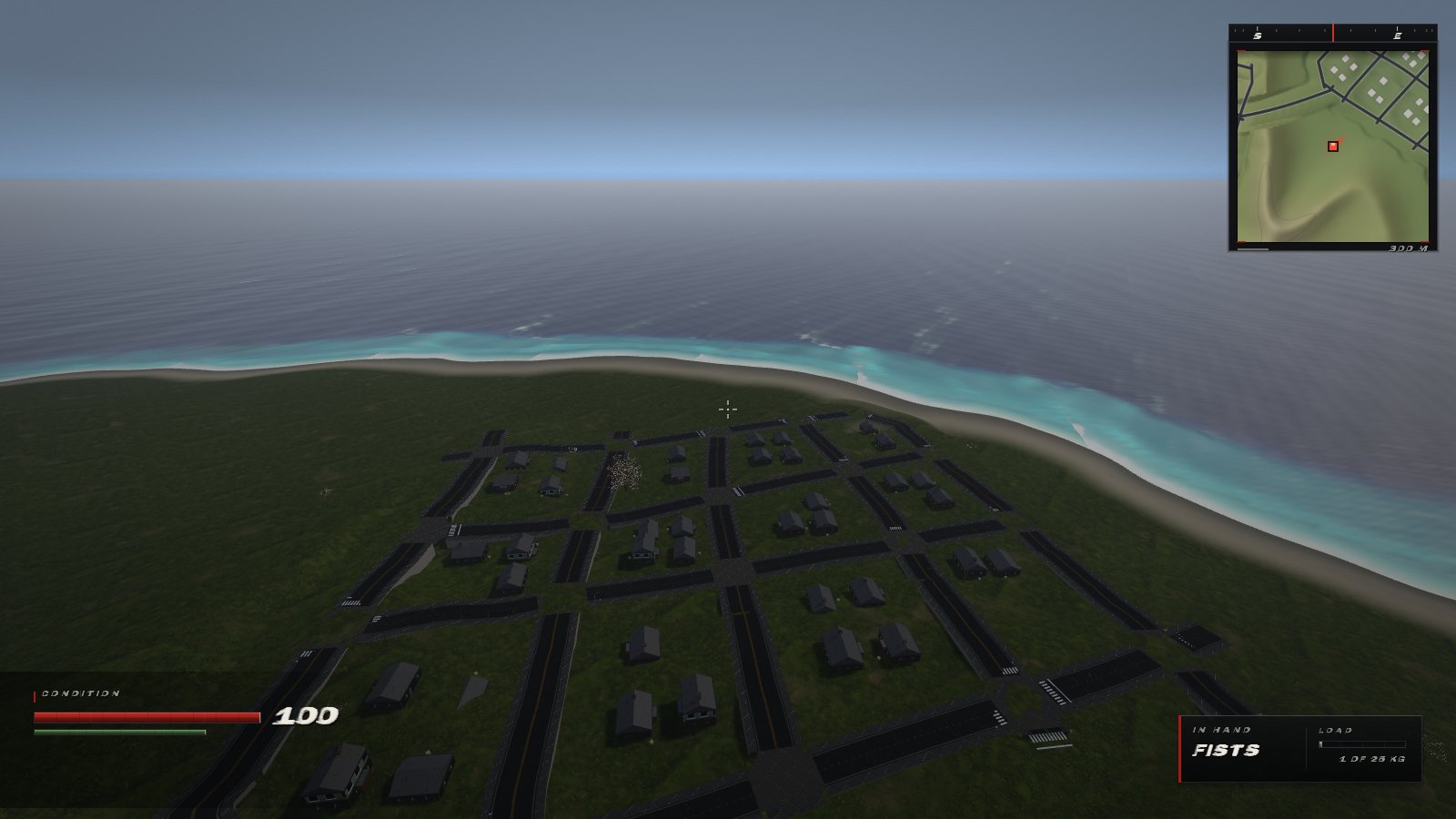
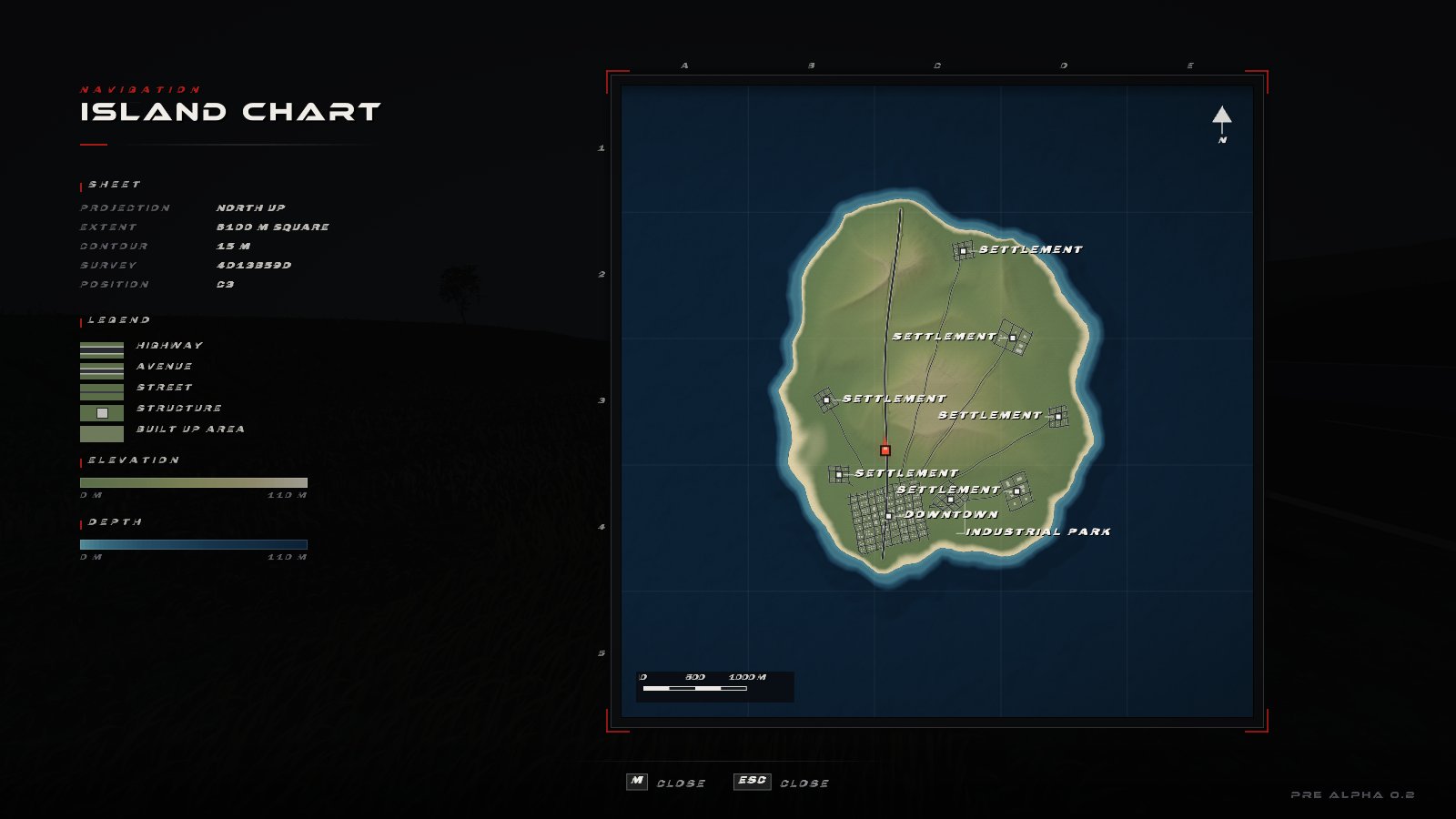
The island more than quadrupled, to about the size of Skyrim: thirty seven square kilometers of coast, valleys and ridgeline, now holding a downtown and seven outlying settlements linked by real distances of wilderness. Streets got rebuilt on how island towns are actually engineered, studying Hawaii county road standards: avenues climb from the sea toward the hills, cross streets follow the shore, and every street now lies flush with its own blocks instead of riding embankments. The ocean got a deep cleanup pass too. Caustics now wander like real light instead of marching in straight lines, foam is a lace with holes and shadows in it rather than a sheet of white, and wide shallow lagoons read glassy and clean.
Real ground, real roads, real trees
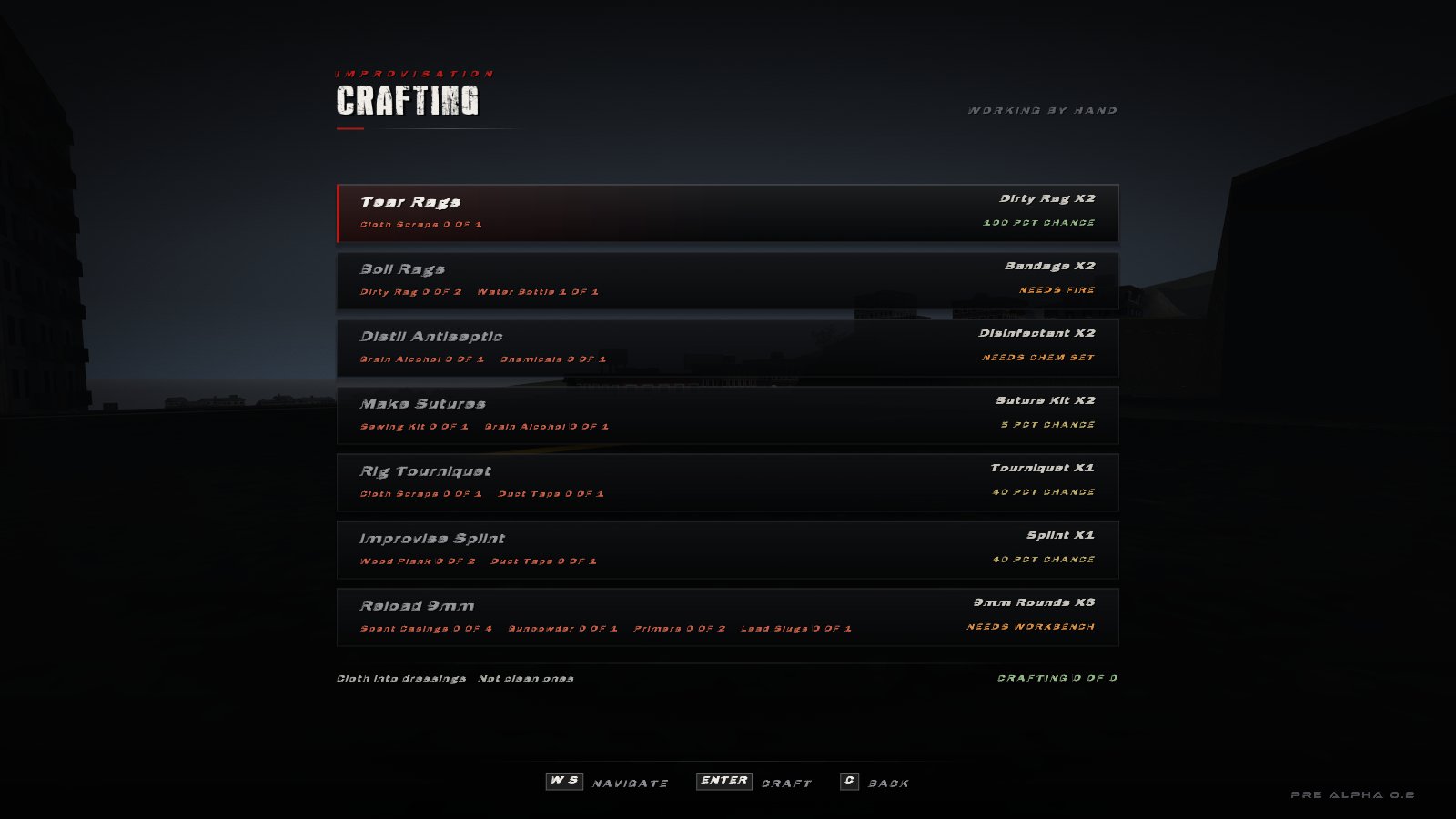
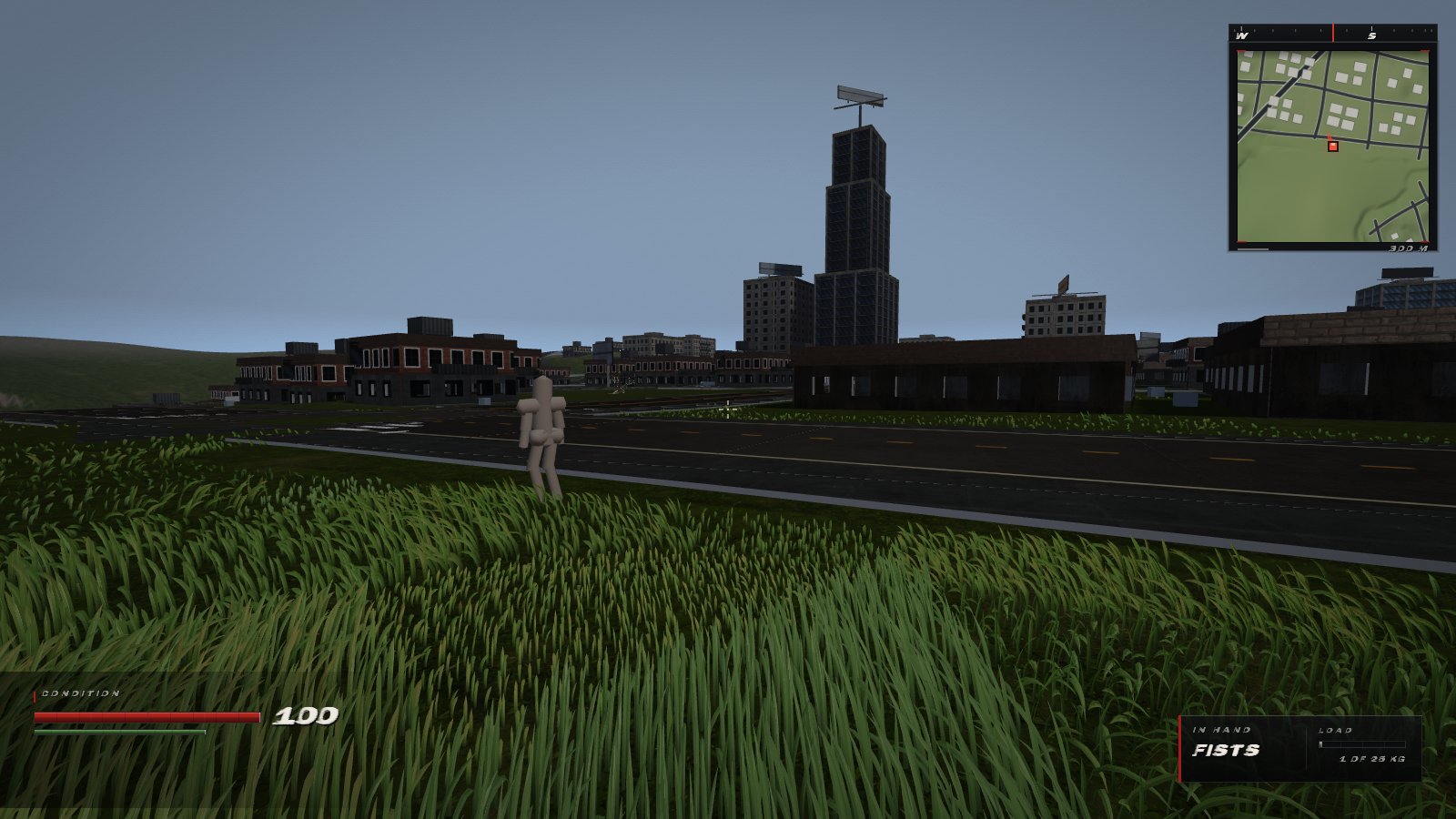
The island stopped being a diagram. The ground is now surfaced with scanned grass and dirt that wears through where the land is dry, streets are smooth swept ribbons that curve and climb with the hills, and intersections got real corner geometry: rounded kerbs, one continuous asphalt surface, crosswalks sized to each street. Over a thousand real trees grow across the island by altitude, canopy giants in the lowlands, dead wood on the dry ridges, and every one of them casts a leaf shaped shadow. Survival came online too: swing what you carry, craft dressings and splints from scavenged scraps, treat each wound with the right supplies, and shove past bodies that stumble and catch themselves. All of it runs about four times faster than it did yesterday.
Sun, shadows, and a highway out of town
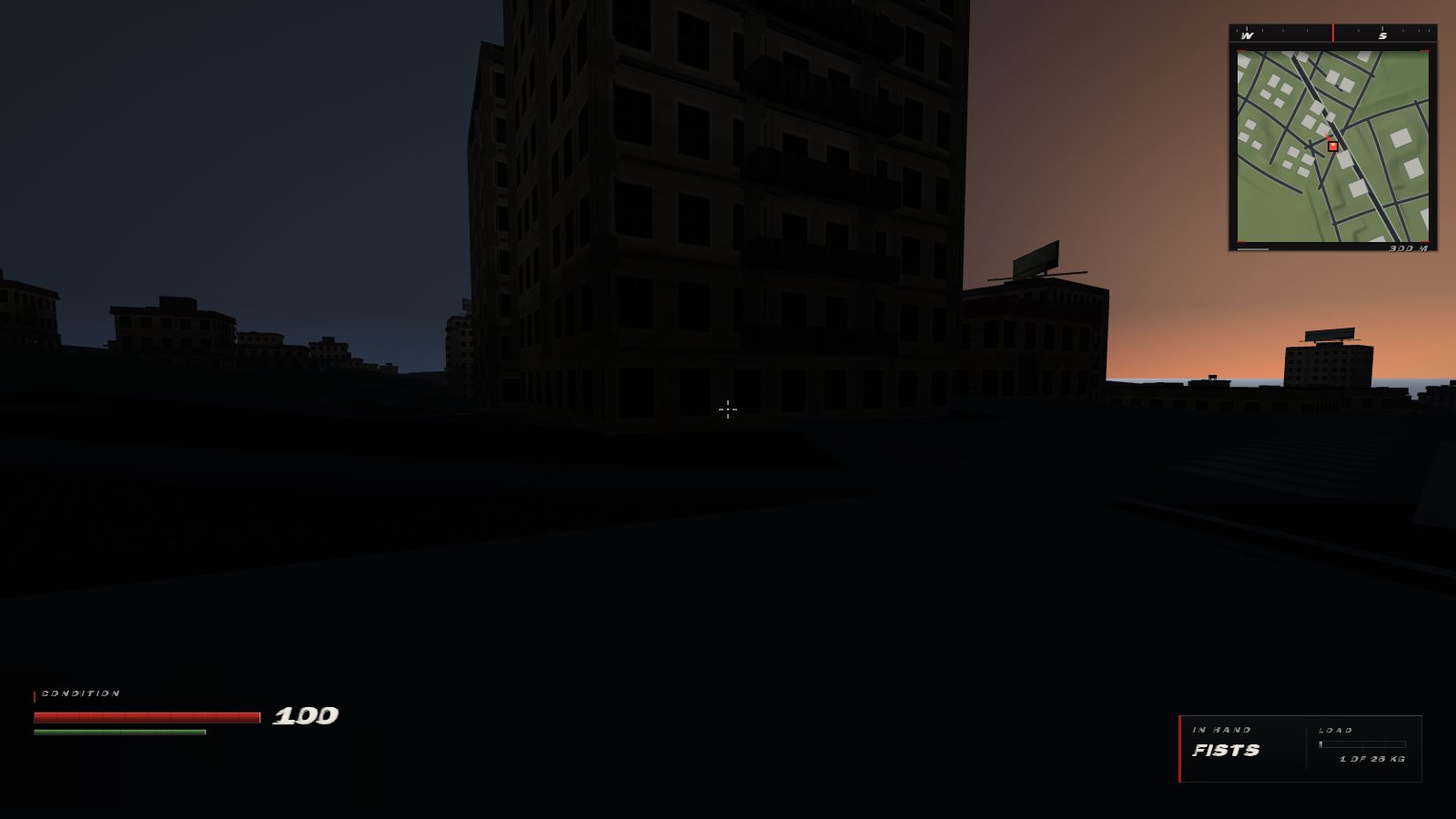
The island got its light. Real time shadows now fall from every tower, house and street sign, with soft sky occlusion filling in the shade so alleys feel enclosed and open ground feels open. A divided highway now sweeps across the island linking all five settlements, lined with faded billboards for brands nobody is left to buy. Buildings stopped being closed boxes: ground floors open up with real doorways, interiors, wrecked rooms and spray painted messages from the people who left. New points of interest landed too, from a pawn shop and a bowling alley to corner bodegas and abandoned military checkpoints. You can swim now, all the way down, and the seabed actually goes down: the shore shelves into a reef, then drops off a wall into open water. Grass was rebuilt blade by blade into curved ribbons that catch the sun, and every launch now generates a brand new island.
Weather the island, hear the island
Rain now carves the terrain before you ever see it: a full erosion pass cuts valleys and lays down the flat ground the towns are built on, while the ridges above stay sharp. The sea got rebuilt from the seabed up, with real depth, breaking waves that roll in and collapse along the shore, and foam that runs up the sand. Blocks divide into lots so streets are lined with buildings instead of dotted with them, junctions have proper crosswalks and stop bars, and the whole interface was redrawn. And the island has a voice now: wind, surf, distant creaking metal and gulls, all mixed live against where you are standing.
A city you can get lost in
The island nearly tripled in size and now holds five settlements: a downtown of glass towers and concrete offices, residential neighborhoods of houses on quiet streets, and an industrial park of warehouses and loading docks, all linked by highways that follow the hills. Every building is generated, right down to its facade: brick courses, window bays, curtain wall glass, corrugated siding, boarded up storefronts. Roads were rebuilt to lay themselves over the finished terrain, so the asphalt sits flush against the ground everywhere it runs.
The island gets real
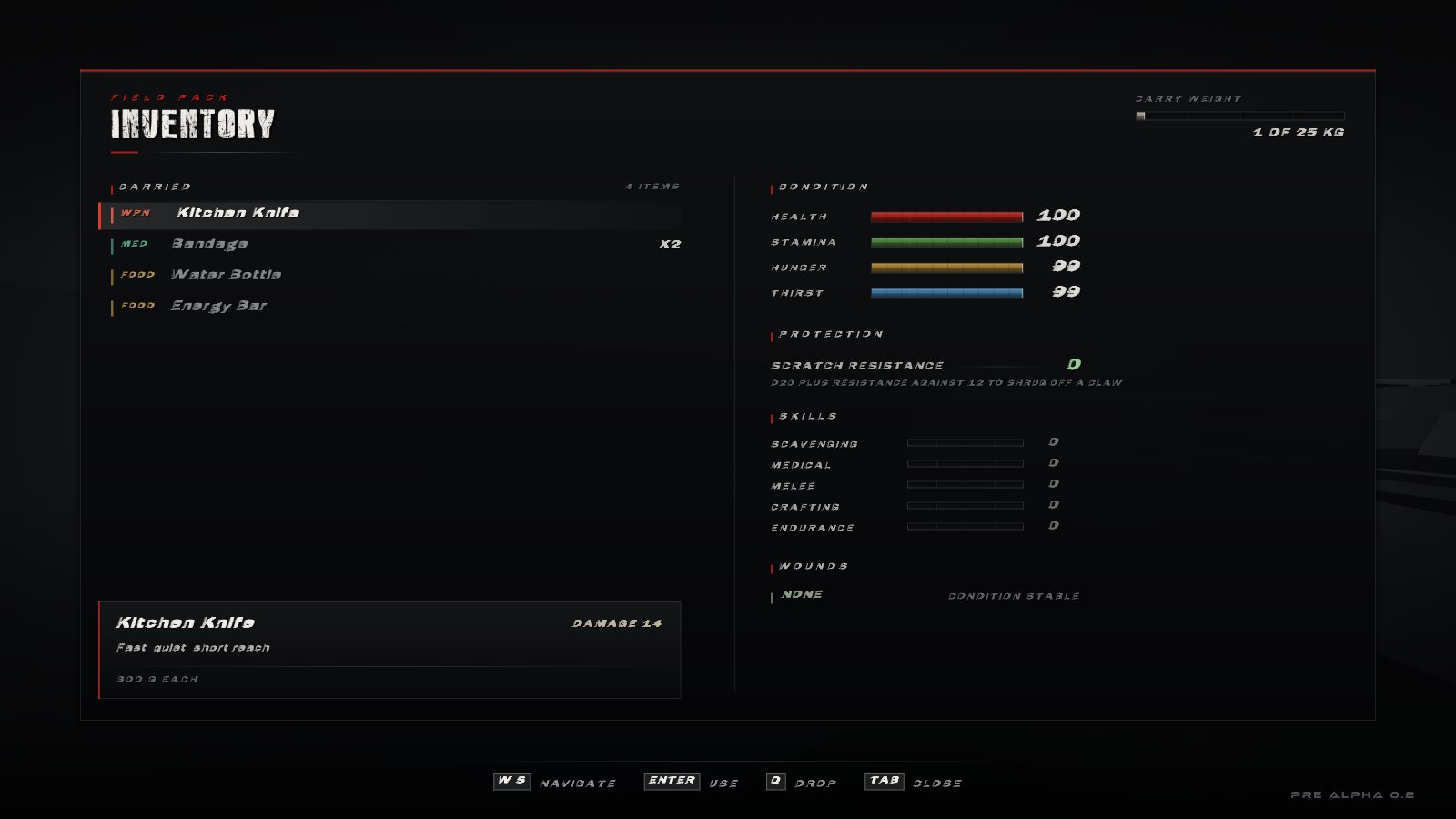
Big generation update. Coastlines now carve bays and headlands, a rocky spine runs through the interior, and the cities stopped being neat squares: street grids rotate to follow the land, blocks vary, roads curve with the hills, and lone buildings sit on the outskirts. Survival systems came online too: a full inventory with carry weight, health and stamina, hunger and thirst, wounds that need bandaging and disinfecting, armor with scratch resistance, five skills that grow with use, and supply caches to scavenge across three districts. Plus a minimap and a full island chart on M.
The city arrives
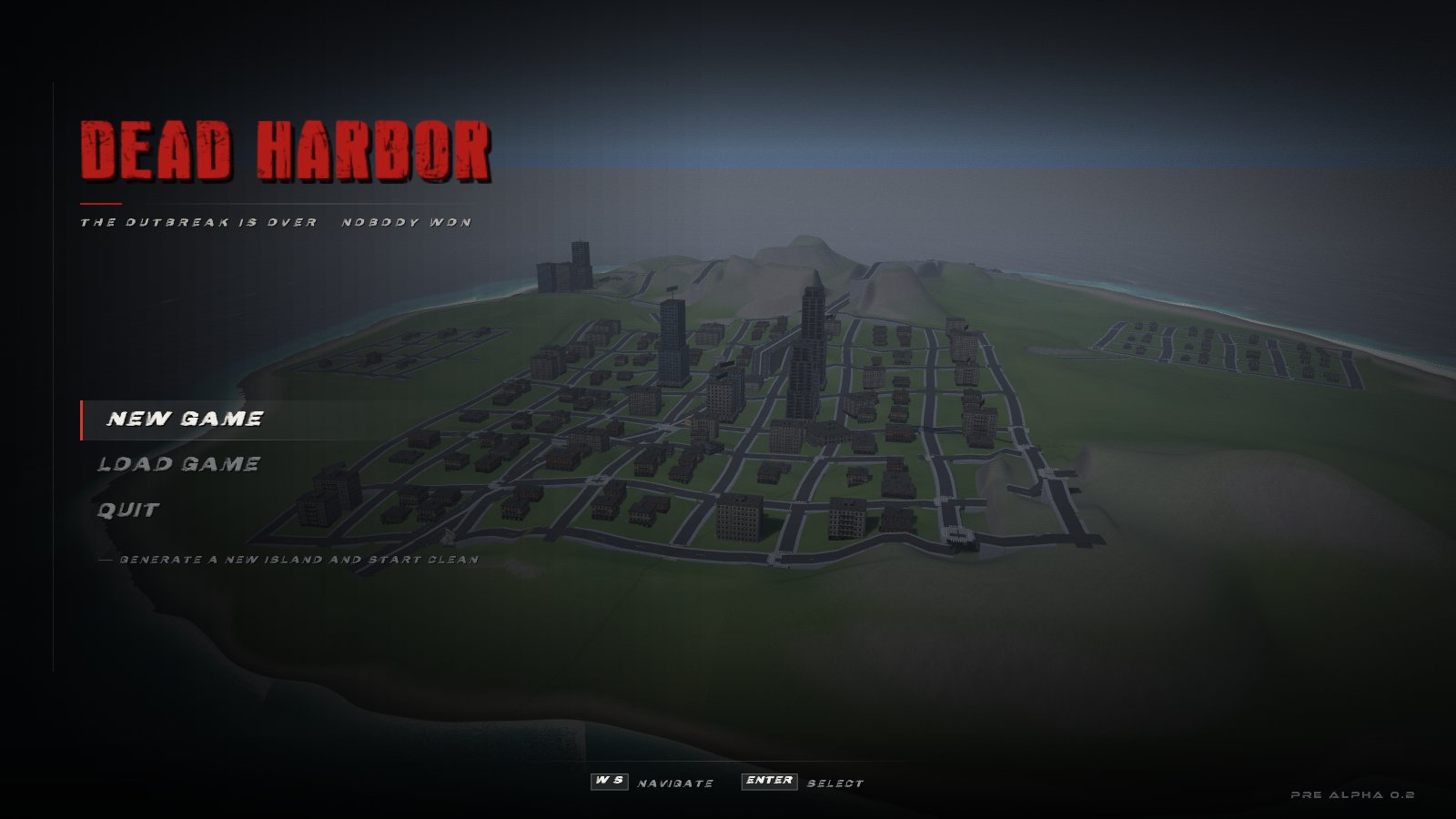
The island is no longer empty. A dead skyline now rises out of the hills: every world seeds its own city, each building placed individually with the ground leveled beneath it. The ocean learned real waves that swell, break into foam at the shore, and calm to glass at the horizon. The menus got a full redesign, and the main menu now orbits the island city itself. Next: streets between the towers, and doors that open.
Day one: an island exists
The engine went from zero to a walkable world in a day. A fresh Vulkan 1.3 renderer, a procedurally generated island with physically based grass, rock and sand from scanned materials, an atmospheric sky, ocean, fog, a first person controller, a save system with three slots, and a full menu flow. Every island is generated from a seed, so no two saves share the same ground. Next up: making the terrain hold up close, then the first buildings of the harbor town.